
Canada's long-form census should be annual and mandatory
I yearn to hand over my data to the glorious machine.

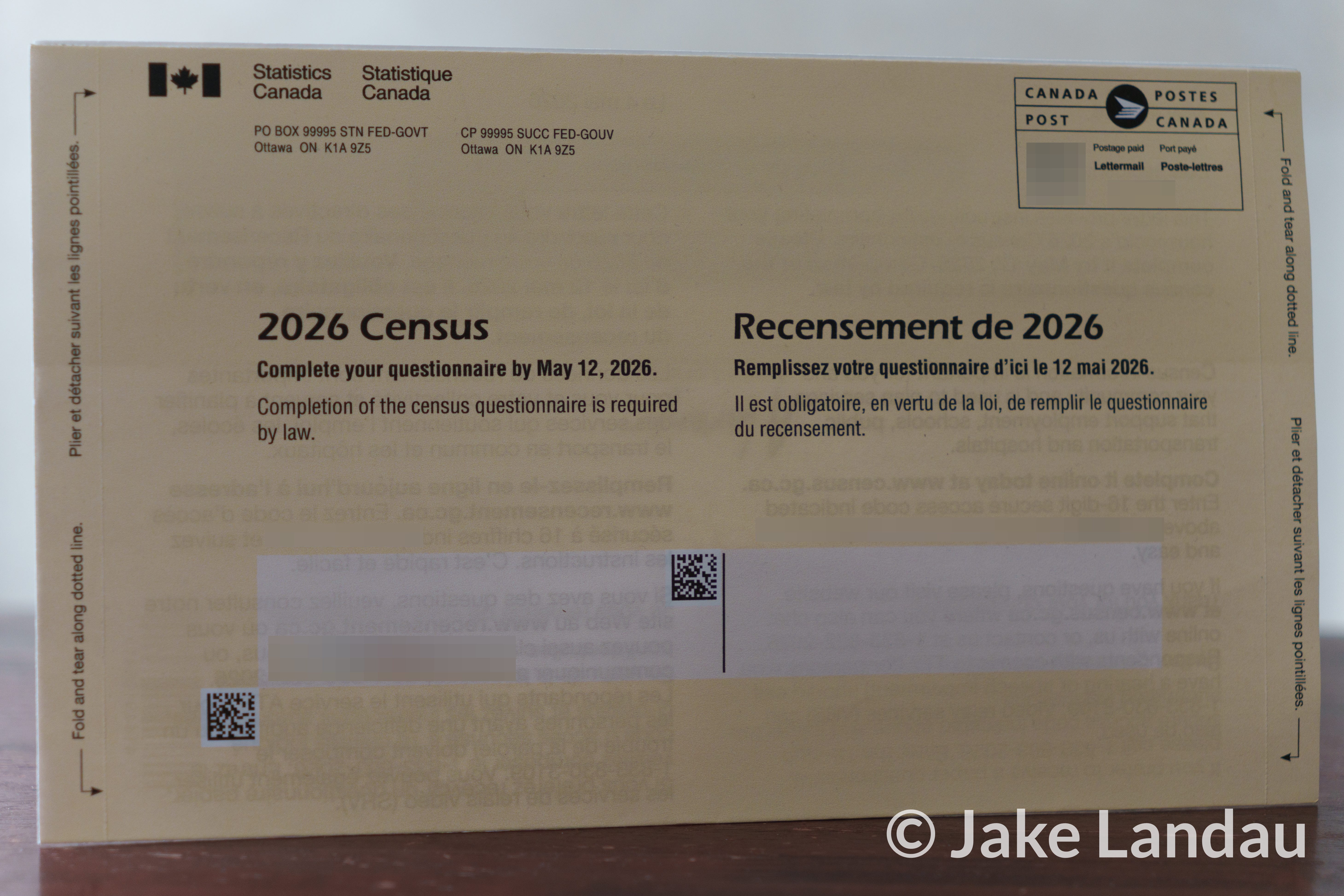
Every five years, Statistics Canada conducts a national census of the population, collecting very important information about the shape of Canadian society, and for the 2026 Census, the deadline was May 12th. Don’t worry if you missed it, though; fines only start to kick in after several months of dilly-dallying on your part. The first formal census to take place in what would later become Canada was that conducted in 1666 by colonial administrator Jean Talon, the Intendant of New France, who conducted it largely by himself on a door-to-door basis.
The enterprise has obviously grown a great deal since then, covering a population several orders of magnitude larger, recognizing and respecting a wider variety of backgrounds and identities, and taking into account questions and problems that 17th century colonizers couldn’t have even begun to imagine. With that said, both the 1666 Census and the 2026 Census will serve the same core purpose: allowing the government to make informed decisions and smarter choices.
However, if we really want the government to make the best decisions possible, with the largest sample set and with numbers updated much more frequently, there are some changes we can make to the current system. We can make the census happen every year, and we can make everyone take the long-form census.
First, a note on legalities: Technically, Section 8 of the Constitution Act, 1867 requires that a census be held at a minimum of every ten years, but in 1971 the Parliament of Canada passed a law doubling the frequency, bringing it to the once-every-five-years ordeal we have today. Clearly, the constitution is interpreted as setting a minimum, and we can conduct the census much more frequently if we wish.
Further, considering that the results of the census can take roughly two years before every piece of data fully trickles out of Statistics Canada, we have to consider that various levels of government in Canada will be using information from the 2021 Census until 2028. Even if we assume that the lead time can’t be shortened due to vital work to clean up and analyze the data, we would benefit from an annual census that at least keeps us to a static two-year gap, rather than the dynamic two-to-seven year gap that exists right now.
And in terms of the burden of completing the census, the short-form census takes roughly five minutes to complete, while the long-form census can take anywhere from 20 to 45 minutes depending on how you answer specific questions. In any case, this is clearly an order of magnitude less burdensome of a time commitment than filing your taxes, which we do expect people to complete every year. The census also comes through a single government web portal, rather than needing you to pay for your own software as tax filing does.
Regardless of the long-form vs short-form census issue, performing the census in Canada once every year would not be an unreasonable ask of the population. And when we take into account the small time burden that the long-form census asks of Canadians, it raises the question as to why everyone doesn’t receive the long-form census as the only census?
While the short-form census contains basic demographic information, 25% of Canadian households instead receive the long-form census, asking additional questions regarding “the social and economic situation of people across Canada and about the dwellings they live in.” The long-form census is handed out randomly to ensure a non-biased sample, which is why to the disappointment of nerds satirized in The Beaverton, you cannot opt in voluntarily.
There’s a fair argument that the random samples means not every Canadian needs to fill out a long-form census, but the counterargument is that by making the census feel like a burden, a vital source of data for government planning can be politically attacked. This is not a hypothetical; former Conservative Prime Minister Stephen Harper’s government cancelled the long-form census entirely before 2011, forcing Statistics Canada to put a disclosure on the data released in 2012 that they must “exercise caution” comparing the 2011 results to previous years. Our picture of Canadian society in 2011 is still incomplete today in 2026 due to the Harper policy.
Thankfully, the Liberal government of former Prime Minister Justin Trudeau ensured the 2016 Census would include the long-form questions once again, limiting the damage to a single cycle. Nonetheless, giving every household the long-form census would build resilience against a future attack on Statistics Canada along the same lines as the 2011 assault.
And providing them the funding to conduct the census once every year would greatly benefit all levels of government, giving them access to information that is much more fresh and thus more relevant to the current situation at hand. The time commitment on individual Canadians will be insignificant, but the benefits for government policy and planning will be immense.
Most importantly, though? We can make that sad nerd from The Beaverton piece happy again. And isn’t that what politics is all about?
I'm glad I finally got a long-form census. It's really important that Canadian businesses & govt services know the demographics & overall behaviours of citizens. Let's face it, many digital businesses know way more about a lot of us anyway.