
NDP Leadership Voting is open! How should you rank your ballot?
Recommendations on how I would if I could, but I can't so I shan't.

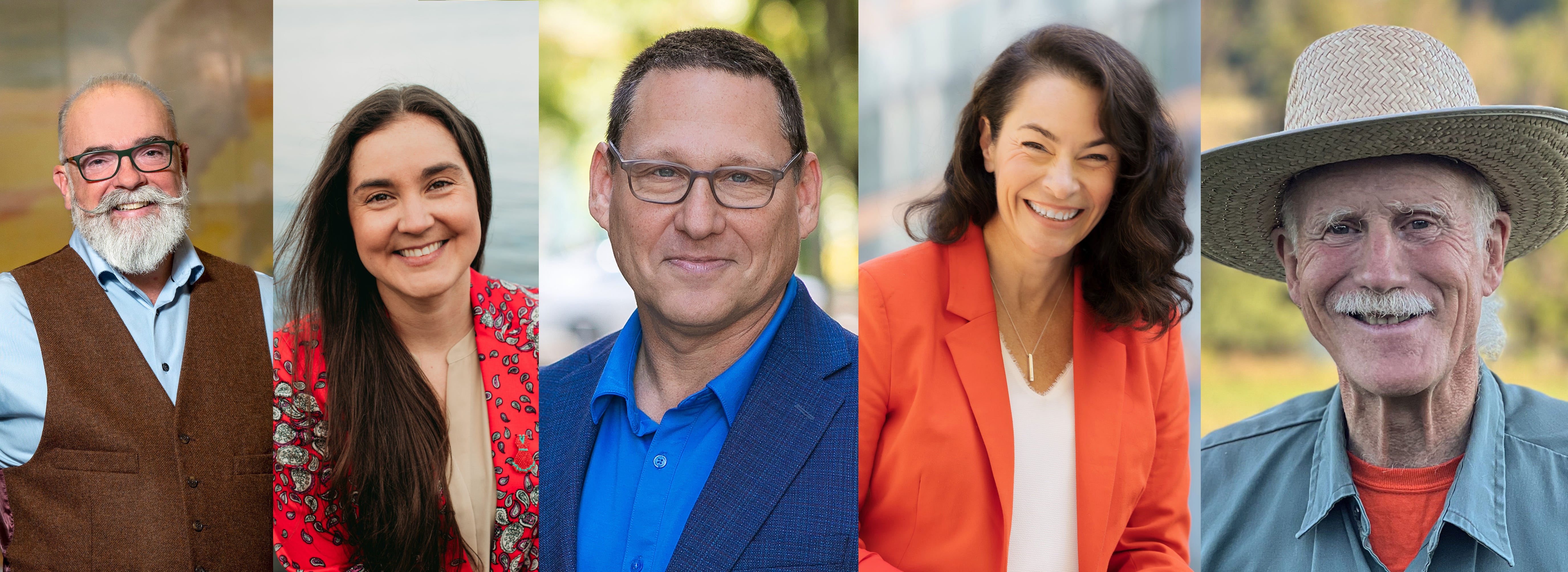
As of this morning, members of the New Democratic Party are now able to submit their ballots in the contest to determine their new leader. In order to vote, you must have been a member in good standing by January 28th of this year, and those of you who did join or renew your membership in the NDP before this date will rank the various candidates in the order that they prefer them.
Voters are not required to rank all five candidates on their ballot, and indeed if there is someone you don’t want your vote falling down to under any circumstances, you can simply rank 1 to 4, or even fewer if you’re really picky. NDP members should feel no rush to fill out their ballot immediately, as the voting period concludes on March 28th, the day before the leader will be announced at the final day of the NDP convention in Winnipeg.
A lot can happen between then and now, and while I don’t see anyone dropping out, it is possible that candidates could cross-endorse each other, saying “rank me as your first, but rank them as your second”, and that may matter to you. But as it stands, here is how I, as an independent socialist unaffiliated with any federal party, would rank the five options available:
No. 1 - Tanille Johnston
“A proud Liǧʷiłdax̌ʷ woman from the WeWaiKai First Nation”, Tanille has a breadth of experience that makes her the Platonic ideal of what a modern NDP candidate should be.
She has worked for 14 years as a registered social worker, including her current senior role with B.C.’s First Nations Health Authority. She has served on the WeWaiKai Lands Committee, and does all of her current work while also being a city councillor in her community. Her platform addresses many of the fundamental inequalities in society, including housing, education, childcare, transportation, with a keen eye to rural areas that have been left out of the equation.
While normally a lack of French is concerning for federal politics, in her case it is more than justified. She has dedicated her time to learning her people’s language, Kwak̓wala, which is rated as “Critically Endangered” by UNESCO and currently has just a few hundred speakers, primarily due to Canadian efforts to forcefully erase their culture. Preserving and reviving indigenous peoples’ languages is a priority for any federal government that truly seeks reconciliation.
Overall, I’m very excited for Tanille’s future in electoral politics, and I hope to see her accomplish the changes she seeks for this country. I would rank her right at the top of your NDP leadership ballot.
No. 2 - Avi Lewis
Correction: An earlier version of this ranking of Avi Lewis cited the book Seeking Social Democracy by Ed Broadbent, Frances Abele, Jonathan Sas & Luke Savage. While it is a very good book also worth reading, this article meant to instead cite Matt Fodor’s From Layton to Singh in reference to Avi Lewis.
In contrast to Tanille, Avi has been a prominent name in NDP circles for an extended period of time, the son of former Ontario NDP leader Stephen Lewis and esteemed writer Michele Landsberg. Having recently read From Layton to Singh by Matt Fodor, it was remarkable seeing just how many times Avi was asked by members of the NDP to run for the leadership in past contests, and how many times he rejected doing so.
For whatever reason, he’s ready to run for leader now, and he’s certainly made a big splash, absolutely dominating his rival leadership candidates in terms of fundraising, and also gathering his money from a broader base of Canadians. Money shouldn’t dominate politics, but political operations do require capital in order to conduct their activities, and Avi is demonstrably in the best position for this.
Avi has an extensive background in journalism, as well as deep involvement with the ecosocialist Leap Manifesto that Thomas Mulcair and Jagmeet Singh both distanced themselves from. It is Avi’s open embrace of the socialist label that makes him attractive to me as a candidate; NDP candidates both federally and provincially have been told to abandon socialism for electoral success, but without socialism the NDP has no reason to exist as a party.
Many right-wing NDPers may resent Avi for criticizing them, but I find it refreshing for him to make these intra-NDP debates public. Canadian politics requires an ecosocialist vanguard that will challenge the neoliberal status quo, and take the fight against climate change seriously. These factors make Avi a solid No. 2 choice for your ballot.
No. 3 - Heather McPherson
If Heather has any advantage over her rival leadership candidates, it is the fact that she is already a sitting MP in the House of Commons, and she would be immediately visible to the public. She was first elected as an MP for the NDP in 2019, and in 2021 and 2025 she outperformed every other NDP candidate across the country in vote share.
The fact that she was just one of seven NDP MPs to retain their seat after the 2025 decimation is certainly a mark towards her local electability. And her strong push on Palestinian rights as the NDP Foreign Affairs critics during the Gaza Genocide is a stance that reflects well on her character. Both Heather and Avi have a basic level of French competency that can be expanded upon with instruction and practice.
In regard to the existential threat of climate change, however, Heather is a clear step downward from Tanille and Avi. She supported the Trans Mountain pipeline, and is overall in support of the fossil fuel industry that dominates Alberta. I understand that this may be electorally successful for her specific Alberta riding, but anti-climate policies will be electorally damaging in Québec, where the NDP must win seats to become viable again.
Overall, I do not appreciate Heather’s comment that her opponents’ policies are “not terribly viable”, and the phrasing of “purity tests” is curious considering it is frequently used by Liberals to criticize the NDP. It is not the job of a socialist party to make excuses for the broken capitalist system; socialists must show the public that a better way is possible. On this basis, I rank Heather below Tanille and Avi, and suggest you put her No. 3 on your ballot.
No. 4 - Rob Ashton
Rob came out of the gate last year with an initially strong showing, a dockworker with decades of experience as a union member, now Canadian Area President of the International Longshore and Warehouse Union. The NDP has lost a significant amount of private-sector union support in recent years, and someone like Rob could do a lot to pull them back.
I also appreciate that while his social commentary has been limited, he has repeatedly espoused that “division is the weapon of the boss”, telling blue collar workers that debates like trans athletes are stirred up by capitalists as a distraction to divide the working class. I do think that certain groups like trans people and immigrants deserve a more forceful defence in their favour, however.
What immediately took the wind out of Rob’s sails, in my regard, was his Reddit AMA blunder. While campaigning, he criticized workplace adoption of AI for getting rid of worker’s jobs and undermining democracy. Yet when he conducted a Reddit AMA, his campaign used an LLM like ChatGPT or Claude to generate the answers, including an answer describing the way in which he opposes the use of AI!
As a writer myself, and someone who has done real communications work for political candidates in my pre-columnist career, it absolutely dumbfounded me to discover that his team is incapable of describing their own candidate in their own words. How could he have hired a communications crew that doesn’t know how to write? And how could NDP voters accept someone who goes back on their word about AI this quickly?
Rob’s views are similar enough to Heather’s that his lack of political experience and his campaign’s incompetency put him below her in terms of ballot ranking. I would suggest placing him No. 4 on your ballot.
No. 5 - Tony McQuail
Born in the United States in the 1950s, Tony moved to Canada in 1971 to escape the draft for the Vietnam War, owning and operating a farm and getting his Bachelor’s at the University of Waterloo all before finally becoming a Canadian citizen in 1977. All of this is admirable and respectable, and I’m glad he came here and that Canada welcomed him.
Aside from running repeatedly for the federal and provincial sides of the NDP, Tony also served three terms as a school board trustee in the 1980s, and then worked for a cabinet minister as their Executive Assistant in Bob Rae’s Ontario NDP government in the 1990s.
Ranking Tony at the bottom of this ballot has nothing to do with this valuable experience, but rather his recent attitude during the leadership campaign. During one of the debates for the NDP leadership, when asked whether he would commit to learning French, Tony blatantly said he would not, that francophone Canadians need to use a translator to understand him, but that this is okay because he can speak to “mother nature”, presumably like the blue people from James Cameron’s Avatar.
This is not acceptable. For Québec alone it is a dealbreaker and a sign of disrespect, but such feelings also extend to New Brunswick and to francophone communities across the rest of the country. These voters fully understand that you may not have perfect fluency—after all, Mark Carney’s French is rough as well—but you need to show the basic respect of putting in the effort, or having a very good reason why you can’t.
Lacking the qualifications of the other candidates, and taking a poisonous stance on the French language, I suggest ranking Tony at the bottom of the ballot. I do still hope that he and all leadership candidates run for the NDP in their respective ridings, regardless of their success in this contest.
Conclusion
Your rankings may very well differ from mine, and not only is that okay, I encourage you to respond to this ranking with your own! It is important for Canada’s socialist movement to have an open and healthy debate over the path forward; indeed, many of the difficulties the NDP have had in recent years are a result of ignoring their grassroots.
But you may also have various reasons you don’t want to rank a specific candidate at all, and that’s okay too. We all have our dealbreakers, and not every candidate has earned the right to your vote, not even at the lowest ranking. Refusing to place someone in the No 5. slot is itself a powerful statement of your intent as a voter.
However you as an NDP member choose to rank your ballot, all I ask is that you do rank and submit a ballot. If you’re in the position of being a member with the right to vote, you have until March 28th to do it, and in a contest that could very well be close despite fundraising numbers, it would be regretful to not take the chance to have your say.
And whoever does win the NDP leadership, I hope the NDP can find a path out of the electoral wilderness, and seize upon the renewed popularity of democratic socialism in the public discourse. Because if the NDP cannot fill the left-wing niche, another party will certainly rise to do so in their stead.
I appreciate your perspective on McPherson. I’m new to Canadian politics and to having an opposition party. I can’t vote but I did phone bank for her on the basis of her stance against the genocide in Palestine and Canadian arm’s sales to ICE/DHS and Israel. However, I’m used to having to hold my nose for Democrats coming from a two-party system. It’s going to take some getting used to having a broader spectrum of options, and being choosier. Especially when you take ranked choice into account. That really changes the equation. I still want her to hold her riding regardless of how things shake out, because of the positives, but you’re spot on about the climate and Quebec. A lot to learn!
this is almost exactly what my ballot looked like, i just switched lewis and mcpherson