
The next NDP leader should be more like Ed Broadbent than Tom Mulcair
Mulcair rejected democratic socialism, while Broadbent fought for it vigorously.

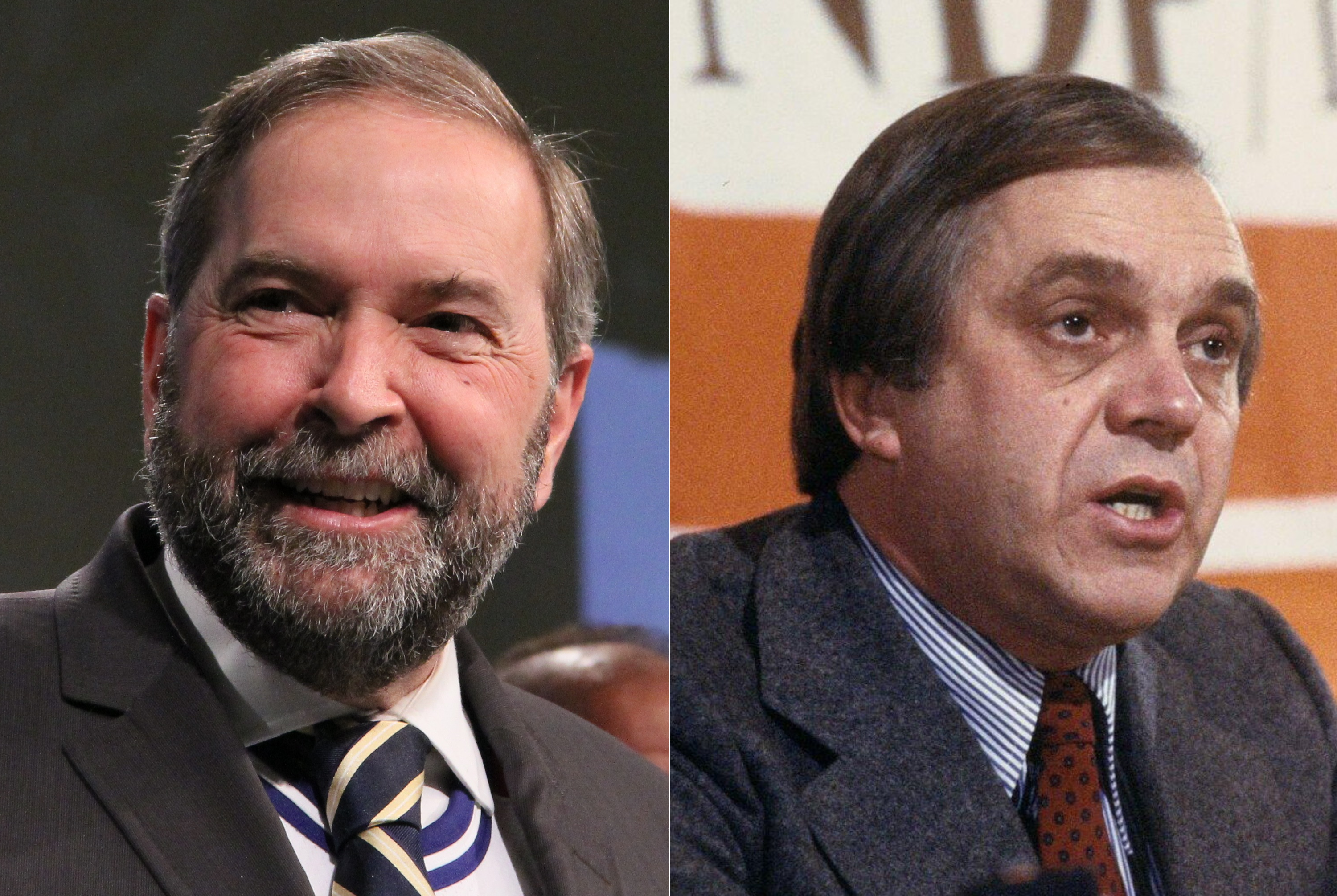

.jpg)
With the ongoing voting for the NDP Leadership Contest—the results of which will be announced on March 29th—there has been much discussion over what kind of candidate the next leader of the NDP should be. Indeed, I wrote my own ranking suggestion for NDP members just a week ago.
And among centrist, neoliberal political commentators, a consensus has built that if the NDP want to return to success, they need to model former leader Tom Mulcair, and not the people who helped get him removed. Mind you, the latter people would be Avi Lewis and Naomi Klein, the power couple behind the Leap Manifesto, and the former of whom is running for NDP leader in this current contest.
But what exactly makes the Tom Mulcair period so idealistic for Liberal and Conservative commentators that they would suggest the NDP return to that era? Certainly, they aren’t very likely to vote NDP, nor are they likely to persuade their audiences in that direction. So if that isn’t their perspective, what is their angle here?
For context, in 2011, Jack Layton won the largest federal NDP result in history with 103 out of 308 seats (33.4%), before dying tragically of cancer just a few months later. It is no exaggeration to say that Layton ascended to political sainthood, his death triggering a massive wave of public mourning as he received the extraordinary honour of a state funeral, typically reserved solely for Prime Ministers and Governors General.
It would be hard for any person to live up to such a legacy, but Mulcair did get a fair shake from NDP members after they selected him in the leadership contest following Layton’s death. Unfortunately, after his rightward pivot, where socialism was officially purged from the party’s constitution, the NDP crashed in the 2015 federal election, plummeting to just 44 out of 338 seats (13.0%) as the Trudeau Liberals outflanked Mulcair’s NDP on the left. At that point, Mulcair’s time with the NDP was numbered.
In 1988, on the other hand, NDP leader and committed social democrat Ed Broadbent won 43 out of 295 seats (14.6%) in his fourth election as party leader. While this is one seat less than Mulcair, it’s a higher percentage of seats than Mulcair won, and the percentage is what makes these results comparable across a House of Commons constantly increasing in size every ten years.
Broadbent, in steep contrast to Mulcair, was dedicated to the cause of democratic socialism worldwide, deeply involving himself with the Socialist International and hosting one of their summits in Vancouver. His ideological commitments were very firm and sincere, and over his time as NDP leader, Ed Broadbent slowly but surely built up a base of socialist political power in Canada.
And really, despite becoming an NDP MP and leading the NDP for a short period of time, Tom Mulcair was never really left-wing in terms of his ideology or beliefs. A long-time MNA in the centre-right Quebec Liberal Party and a provincial cabinet minister under the premiership of former federal PC leader Jean Charest, Mulcair entertained talks with all three major federal parties before leaping away from provincial politics. This included the possibility of joining Harper’s Conservative caucus instead of Layton’s NDP.
This, right here, gives the game away in regard to why Mulcair is so attractive to the neoliberal commentariat: He’s not a socialist! He pulled the NDP away from socialism towards his own right-wing ideologies, and the NDP suffered for it! Putting someone like Mulcair in charge of the NDP again would serve the purpose of neutralizing the NDP, or capturing it and twisting it towards the same neoliberal consensus that Liberals and Conservatives are both wedded to.
The question isn’t which ideology will result in a better electoral result, because Mulcair’s “second place” record for NDP results in 2015 is clearly in truth the third place record, below Broadbent in 1988. The intentional choice to highlight Mulcair over Broadbent is based on the ideology of the political commentators who write these opinions. They, as people who do not vote NDP, want the NDP to be more like their parties, rather than remain a committed socialist force in Canadian politics.
I, on the other hand, do not see a reason for the NDP to exist if they are not a democratic socialist party. There are already two major parties that support the neoliberal consensus that Bay Street imposes upon us. Voters understand this, and have no desire for a third party no different from the existing two options.
So I close with one final note for NDP voters: I urge you, do not pick a Tom Mulcair for your next leader. If you want to win seats while remaining committed to your principles, pick an Ed Broadbent.
Ed Broadbent ran cover for Jack Layton, brooking zero dissent in favour of political canonization. Jack Layton was certainly charismatic and left of centre but no socialist either by inclination or voting record. He supported American wars, particularly in the Middle East, was as Russiaphobic as the rest of the running dog commentariat. Not a man of peace despite professing to be one. His public utterances while inspirational did not promote socialism, rather they accommodated the so-called political realities of neoliberalism. Ed Broadbent had his own principles whittled away by the time Jack Layton came around and my sense is that he supported Layton on the basis as indicated above. The creep away from socialism, on the part of the NDP, either as a political cause or even as a word to be avoided, began long, long ago and it’s presence hung seductively over the decision making process for decades as commitment to the NDP from it’s rank and file members and voting public waned. The title of your otherwise great article COULD be “The Next NDP Leader Should Be More Like Stanley Knowles than Ed Broadbent” lol
You saw, I think, that McPherson is trying to build a wall to keep Lewis out. .who is openly advocating for a return to Broadbent's socialist vision ..So far she has not been successful, but the attempt is instructive: she wants to "grow" the party, create a "big tent." She'd do this by moving to the right. She didn't seem to learn anything from the train wreck called Kamala Harris. .