
The Yankees are trying to create a new Katanga out of Alberta
A secession movement as a thin veneer for colonial resource extraction.


The Albertan secessionist movement is trucking ahead, with Premier Danielle Smith avoiding a court ban on a secession referendum by holding a referendum about holding a secession referendum. Behind that secession movement, independent journalist from The Orchard Jeremy Appel came on It’s Getting Pretty Late with Jake Landau to discuss in detail how separatists have doxxed the private information of millions of Canadian citizens in Alberta.
Since then, we know that the group in question, the Centurion Project, led by Albertan separatist David Parker, have refused to cooperate with Elections Alberta demands to cease using this registered voter’s list, which was obtained by them from the separatist Republican Party of Alberta. We also know that the Centurion Project has backing from Republican organizers in the United States, and that some of this Albertan voter data has now been seen in databases owned by Yankee companies and located inside the United States.
Finally, we know that an extensive period of time, various figures linked to the Trump administration have been meeting in person to coordinate with various Albertan separatist groups. The truth of this matter is obvious to us: the United States is sponsoring the Albertan separatist movement in an attempt to carve out part of Canada, and in all likelihood seize Alberta’s natural resources for themselves. In this regard, it is clear that the Albertan separatist project does not seek to create a true nation, but rather a Yankee resource colony, in the same fashion that Katanga was carved out of the Congo in 1961 to feed Belgian imperialism.
After decades of brutal and racist colonial rule under Belgium, both under the form of the Congo Free State and the Belgian Congo, on June 30th, 1960 Prime Minister Patrice Lumumba proclaimed the independence of his nation, the Republic of the Congo, from the colonial masters. Yet less than two weeks later, a political rival named Moïse Tshombe declared the secession of the province of Katanga from Lumumba’s Republic.
The Union Minière du Haut Katanga was a Belgian corporation that controlling mining rights for the region, extracting much of the natural resource wealth of the Congo away from the Congolese people and towards Belgium. UMHK provided financial backing to Tshombe’s separatist Katanga, and the Katangese Armed Forces would be led and trained by Belgian military officers operating as mercenaries, and also hire pink-skinned mercenaries from France, Italy, and neighbouring settler-colonies like Rhodesia and South Africa.
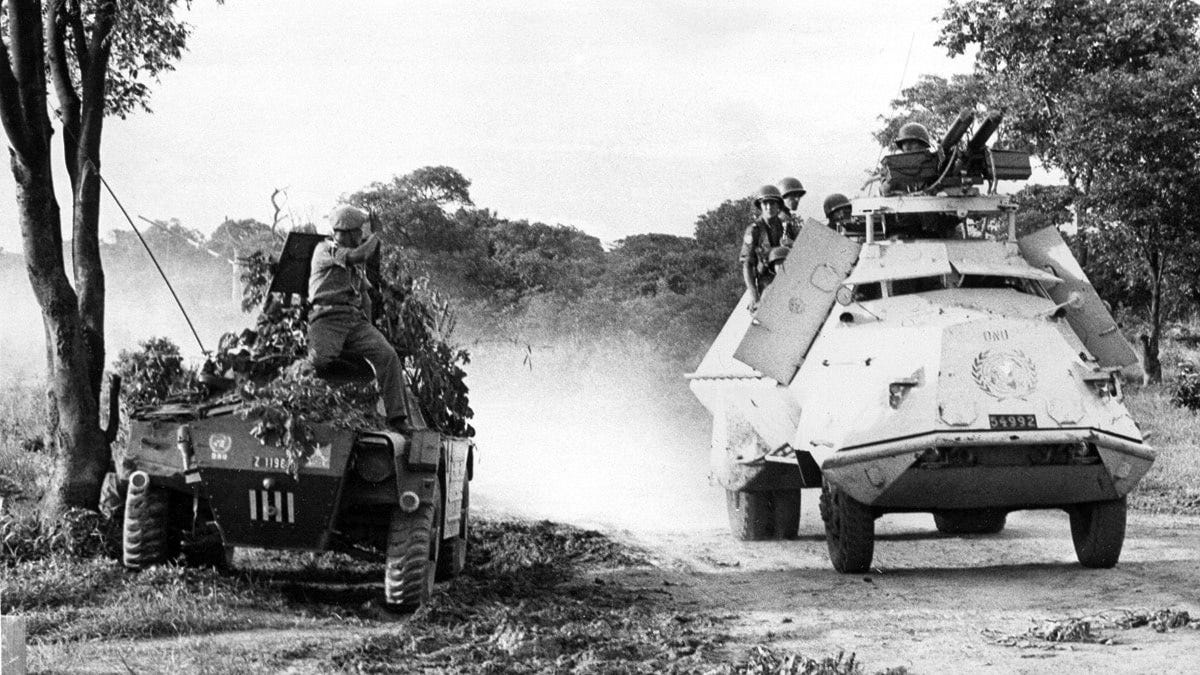
By January 17th, 1961, Lumumba had been replaced in a coup d’état, captured, and sent to Katanga, where Tshombe’s Belgian puppet regime murdered him in cold blood. This provoked massive international outrage, and while the United Nations Operation in the Congo would engage in armed conflict with the Katangese Armed Forces in an attempt to end the Congo Crisis, the murder of Patrice Lumumba is perceived to this day as the final and lasting subjugation of the Congolese people to Western interests.
This is a primary example of what we call “neocolonialism”, where direct colonial administration is supposedly removed, creating a thin veneer of independence and autonomy, while in reality the colonizer uses violence to impose a puppet regime that will continue to steal away the wealth of the indigenous population for the benefit of the imperial core.
Obviously, there is one primary difference between the Congo Crisis and the situation in Alberta. In the former case, the Congo was the colony, and the Belgians were the colonizer. But in the latter case, Canada is itself a settler-colony which has committed significant atrocities against a wide slew of indigenous nations in North America. What we must consider, however, is that the natural resources which the Albertan separatists and their Yankee patrons are after tend to be located on indigenous lands, which will bear the brunt of the environmental damage.
Most importantly, as lopsided in favour of the colonizer as the numbered treaties between First Nations and Canada are—indeed, signing modern treaties on a nation-to-nation basis is a basic priority for real reconciliation—First Nations inside the borders of Alberta are insistent that at the very minimum they want these treaties respected, and a justice of Alberta Court of King’s Bench agreed that this was plainly unconstitutional.
The fact that Alberta’s secession question would be a blatant violation of indigenous rights, and that the courts have ruled as such, is the entire reason Premier Smith has to perform the farcical routine of holding a referendum about a separatist referendum. But the Belgian backers of Katanga had zero concern for violating indigenous rights, and with Premier Smith’s musings about erasing the indigenous rights section from the Canadian Constitution, it’s clear that neither the Albertan separatists nor the United States behind them have any compunctions against performing more of the colonialism they’re already so familiar with perpetuating.
We need to be prepared for what is being telegraphed so obviously here, the kind of actions that the United States and other imperialist powers have imposed upon sovereign peoples in order to subjugate them. For if we do not act swiftly to root out this menace in Alberta, it will be transformed by the Yankees into a new Katanga…and after sampling one bite of this country, the United States will surely have another.