
Why is Carney slashing away at the CBC's budget?
Social democracy depends upon non-profit broadcasting models.

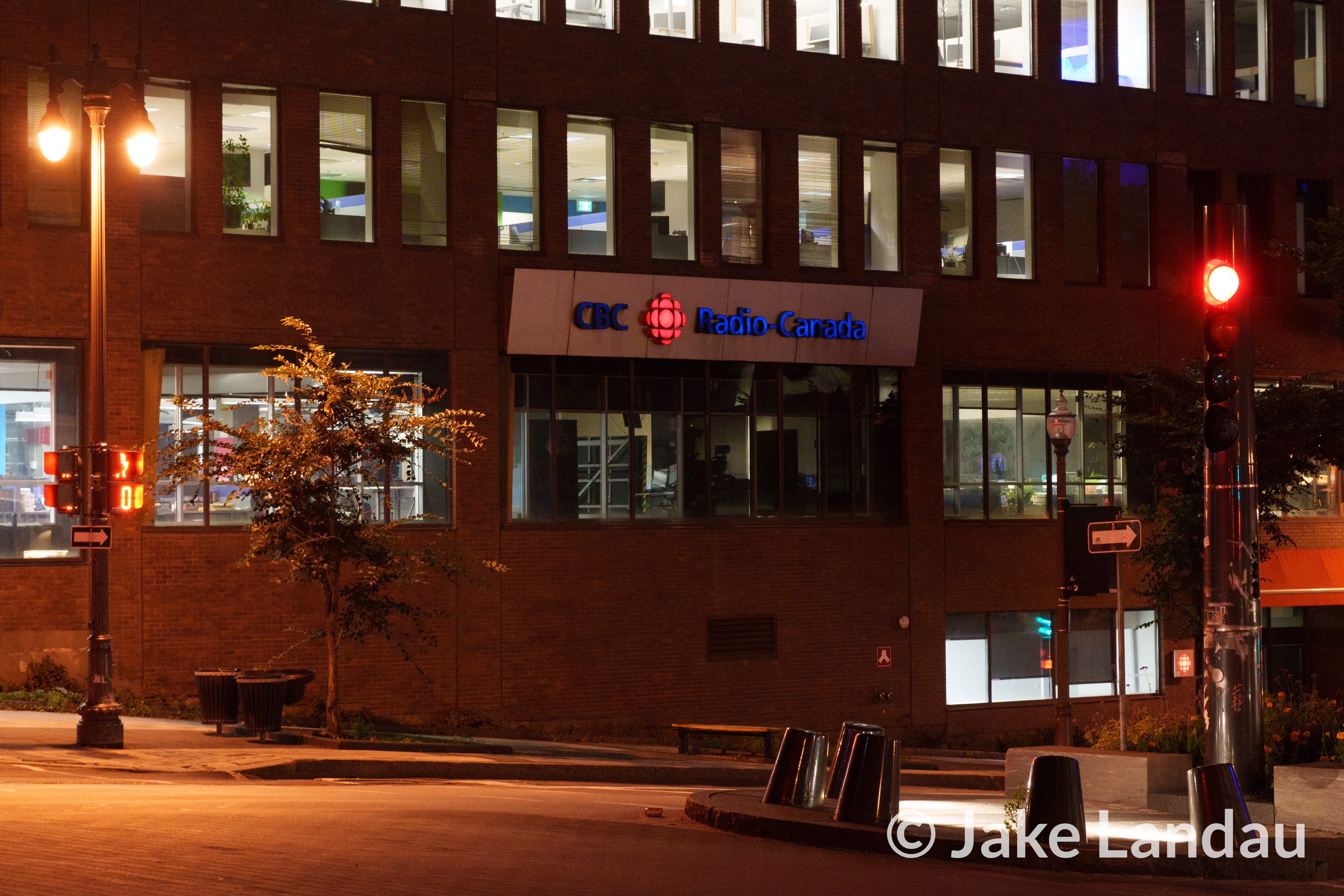
Journalism and entertainment both provide functions of great importance to civil society, but under the capitalist model they have struggled. It doesn’t require much explanation why most countries have public broadcasters; where the profit model has failed, the non-profit model succeeds in keeping people informed about current affairs and engaged with their culture.
And just as these facts are true for most countries around the world, they hold true for CBC/Radio-Canada, which provides multilingual service in English, French, and a variety of Indigenous languages. Where corporate-owned media is laying off journalists, the CBC is boasting that they are hiring local journalists, to provide local news for Canadian communities that aren’t served by for-profit media at all.
While there are other models of non-profit funding for journalism and entertainment, the public broadcasting model is the most common one for the stability it provides. Through money collected from the public, the public is provided with service in the public interest.
But in the Canadian context, that “stability” really isn’t all that stable. When compared to the average set by our peer countries and their public broadcasters, CBC/Radio-Canada receives just 41% of the funding per capita that they do. Canada’s public broadcaster is significantly underfunded by the Canadian people, and a limited budget means a reduced capacity to cover the news and provide programming of public interest.
During the 2025 Canadian Federal Election, Mark Carney promised that if the Liberals were re-elected, they would increase funding for CBC/Radio-Canada by CAD$150 million, and provide a more stable funding basis for future years. He rightly pointed out that their funding must be detached from the sitting government of the day, to ensure they are not compromised or conflicted in their editorial choices.
This increase did occur in 2025, but according to the numbers for 2026, what goes up must now come down. Where the budget for CBC/Radio-Canada in 2024-25 was CAD$1.38 billion, it had increased with top-ups to CAD$1.58 billion in 2025-26. However, rather than continue or increase these top-ups for the next year as Carney promised during the campaign, the Liberals are clawing it back, reducing the budget back down to CAD$1.38 billion for 2026-27.
On the face of it, CBC/Radio-Canada will be in a worse place than they were two years ago, despite ostensibly having the same number of dollars, as inflation has eaten away at the value of that dollar. Many people who work for our public broadcaster, including those recently hired, may not be able to keep their jobs long-term. Gains in local journalism could quickly turn to losses.
The irony is that Canadian Identity and Culture Minister Marc Miller, responsible for CBC/Radio-Canada, made very similar arguments to my own at the House of Commons Finance Committee on February 9th last month, espousing that CBC/Radio-Canada ranks below our peer countries in funding, and that we must increase their funding.
To be clear, I do not think that CBC/Radio-Canada is the best thing since sliced bread. I’ve had the benefit of appearing on the CBC and having my work as a columnist platformed, but I have also criticized the CBC with a fair degree of vociferousness for some of their editorial choices.
What I do know is that the concept of a public broadcaster is broadly necessary, and that it must have a funding mechanism that insulates it from political pressure by the government of the day. Perhaps that means replacing the current funding model of taking revenue out of general taxation with one resembling Britain’s BBC and S4C, where members of the public pay an annual television license fee.
Unfortunately, the Carney Liberals have backed away from any commitment to supporting our public broadcaster. They claimed they would raise the budget for CBC/Radio-Canada going forward, and now it is suddenly being ratcheted back down, something in full contradiction to Minister Miller’s words from merely one month ago.
Overall, this will be damaging for Canadian social democracy, whatever semblance of it still exists after decades of neoliberal erosion. Canadians need media that doesn’t rely on the whims of behemoth corporations with hidden profit motives. Public broadcasters may have their problems, but their accountability to the public means we at least have the power to fix problems when they arise.
Now more than ever, we need to strengthen CBC/Radio-Canada. But instead?
We’re going to make it weaker.