
Calgary could teach Toronto some lessons on how to build light rail
The CTrain isn't perfect, but they've got more than a few tips for us.

Recently, Toronto opened a new light-rail service, Line 6 Finch West, which I have derisively called the 536 Finch West streetcar, both because it is substantially a tram, and because it is not very good. And according to sources reported on by the mainstream press, Line 5 Eglinton may open in less than two weeks, on February 8th.
Obviously, many people fear that the Eglinton service will have very similar problems to the Finch West tram. Indeed, it has a large above-ground portion, using low-floor Light Rail Vehicles (LRVs), without any true signal priority. To the credit of Line 5, it can at least call itself a semi-metro rather than a tram, as a significant portion will also be fully grade-separated from automotive traffic, making it a mix of a metro and tram depending on which portion you ride.
But having recently had the opportunity to travel to Calgary on private business, I took the chance to survey their semi-metro light-rail system, the CTrain. And from what I have seen, Toronto would do well to be humble, and seek Calgary’s advice on the proper way to build this kind of transit.
The first difference to note between the Calgary and Toronto modalities is that Calgary, for decades, has opted for high-floor LRVs over low-floor LRVs. To explain this in layman’s terms, tram riders in Toronto would notice that on the 500-series streetcars and Line 6, the floor of the vehicle is very close to the ground, but it is also not level.
You may notice on these low-floor LRVs that there are humps in the middle of the walkway, and beside those even larger humps which host seats on a step higher than the train floor. These “humps” are hiding the train’s wheels and axles, which obviously need to go somewhere.
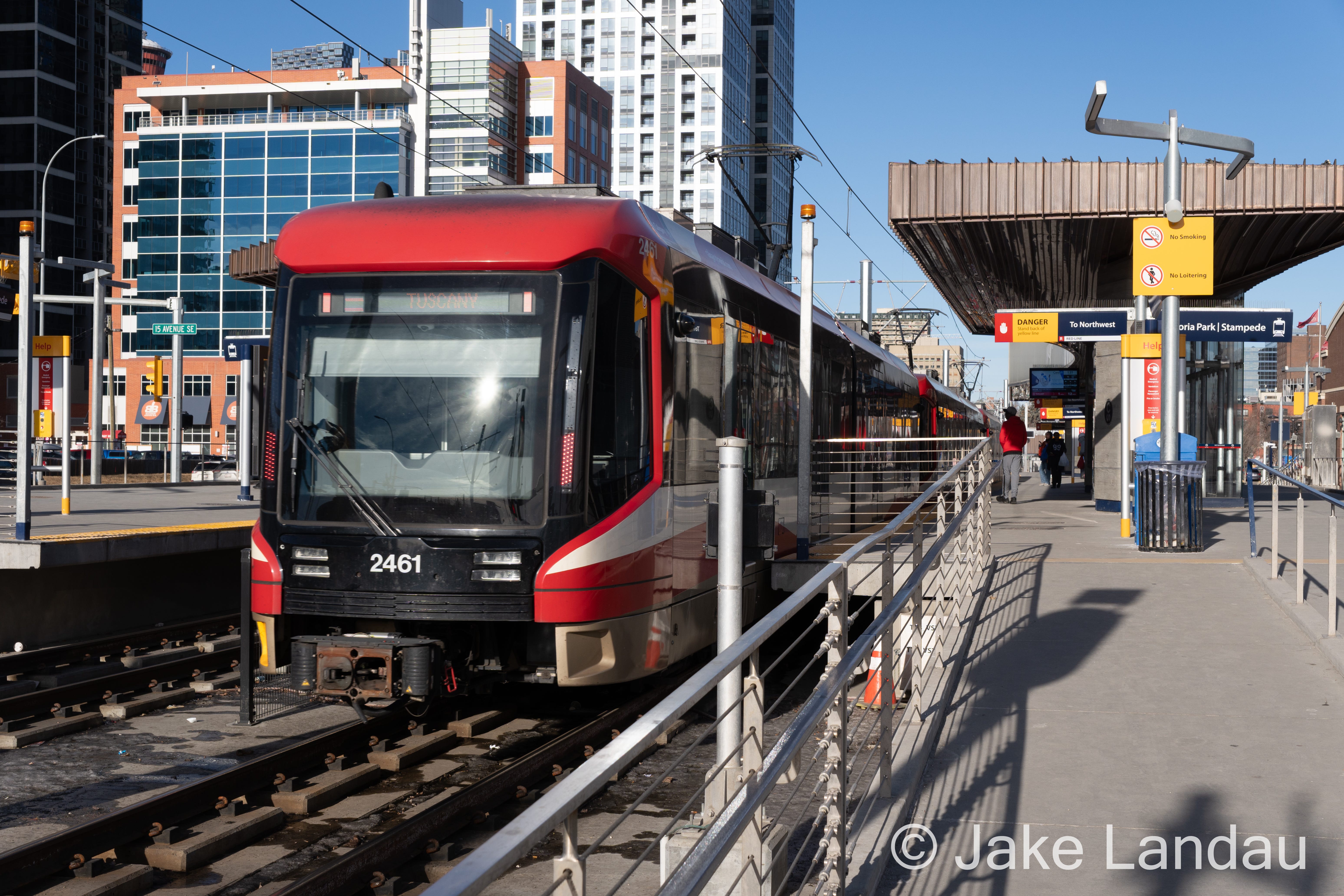
In contrast, a high-floor LRV is simply a rectangular box, with the wheel assembly placed under the box. The internal space of the train is more accessible to wheelchair-users, as it has a fully flat floor that can be wheeled across. It is also mechanically simpler than the complex assembly of a low-floor LRV, meaning that a high-floor LRV has less maintenance required, less mechanical failures, and is both cheaper to purchase and to maintain.
Truthfully, this is where the line between “light rail” and “heavy rail” train cars starts to blur, as a high-floor LRV could easily be used for metro service, and the main distinguishing factor it has from a normal metro car is merely that the internal volume is smaller. But even for tram service like Toronto’s 500-series streetcars, this kind of high-floor LRV still makes sense, as the platforms can be made fully accessible from street level.
And in addition to the cost benefits of a high-floor LRV, they also can carry a larger volume of passengers with each trainload. Indeed, if Toronto’s Line 5 had chosen to use high-floor LRVs like Calgary, it would likely move thousands more passengers per hour per direction than it will with the low-floor Flexity Freedom LRVs. As such, choosing a low-floor LRV has needlessly gimped the total capacity of the line.
Unfortunately, as Calgary builds the Green Line to complement the already-existing Red and Blue Lines, they have foolishly switched away from the high-floor modality, picking low-floor CAF Urbos 100 LRVs which will have the same problems as Toronto’s low-floor LRVs, a problem Calgary had previously avoided entirely! Sadly, our sickness seems to have infected them as well.
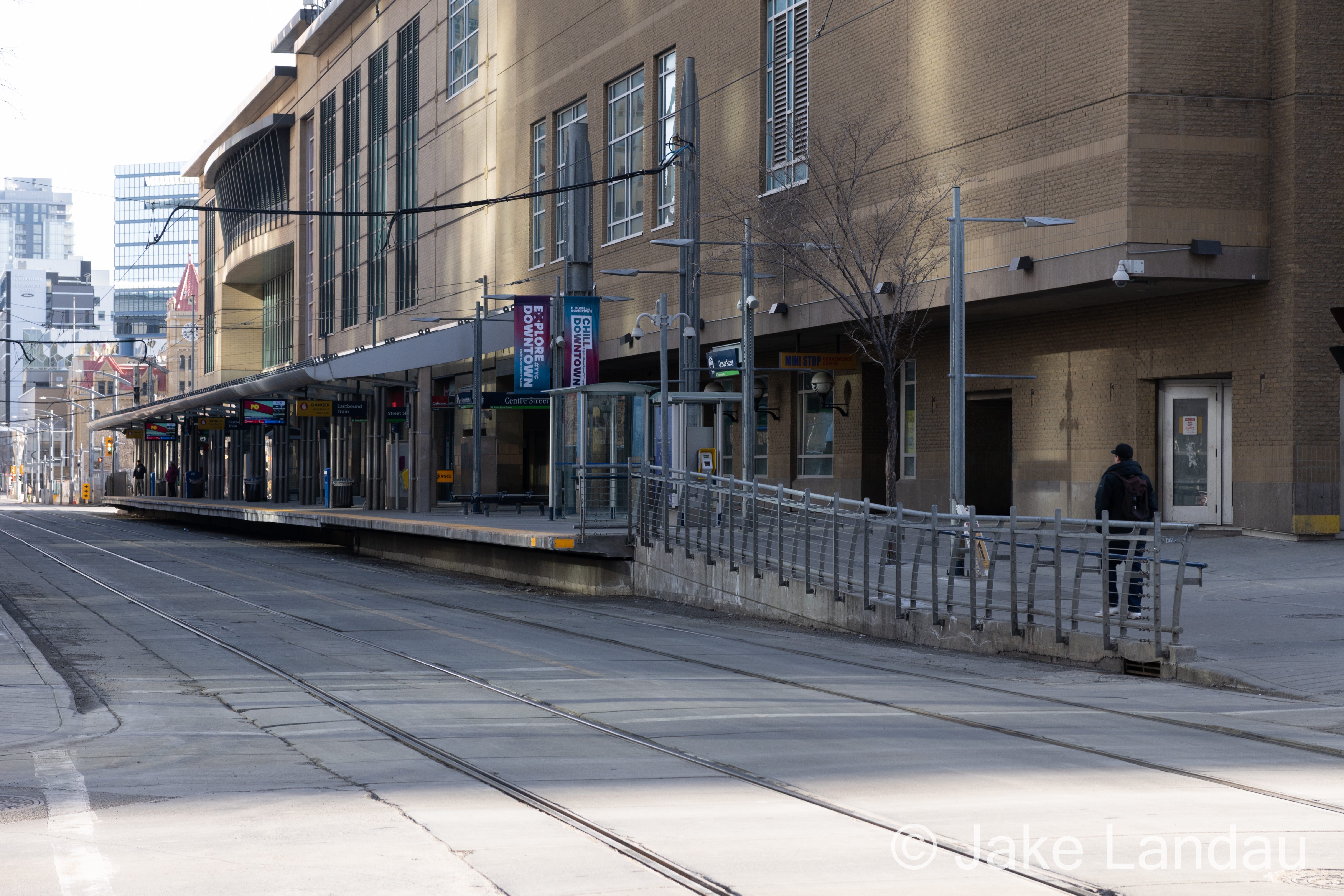
While the Calgary CTrain is indeed a semi-metro, it has taken an unusual path in regard to which segments are grade-separated, and which segments are street-running. Normally, you would grade-separate the highest density segments of the line—that is, if you’re not willing to make a full metro and grade-separate the entire line—and then leave street-running segments at the ends, where population and ridership are lower.
Calgary, however, chose to bury the suburban segments of the line, to satisfy those areas’ NIMBY instincts, and leave the downtown core as street-running. I find this to be a short-sighted decision that limits the passenger capacity of both the Red and Blue Lines, especially since they interline downtown on a single set of tracks. In exchange, however, Calgary has imposed a “Downtown Free Fare Zone” along 7th Avenue, in which you do not pay a fare if your trip is solely between City Hall station on the east end, and Downtown West—Kerby station on the west end.
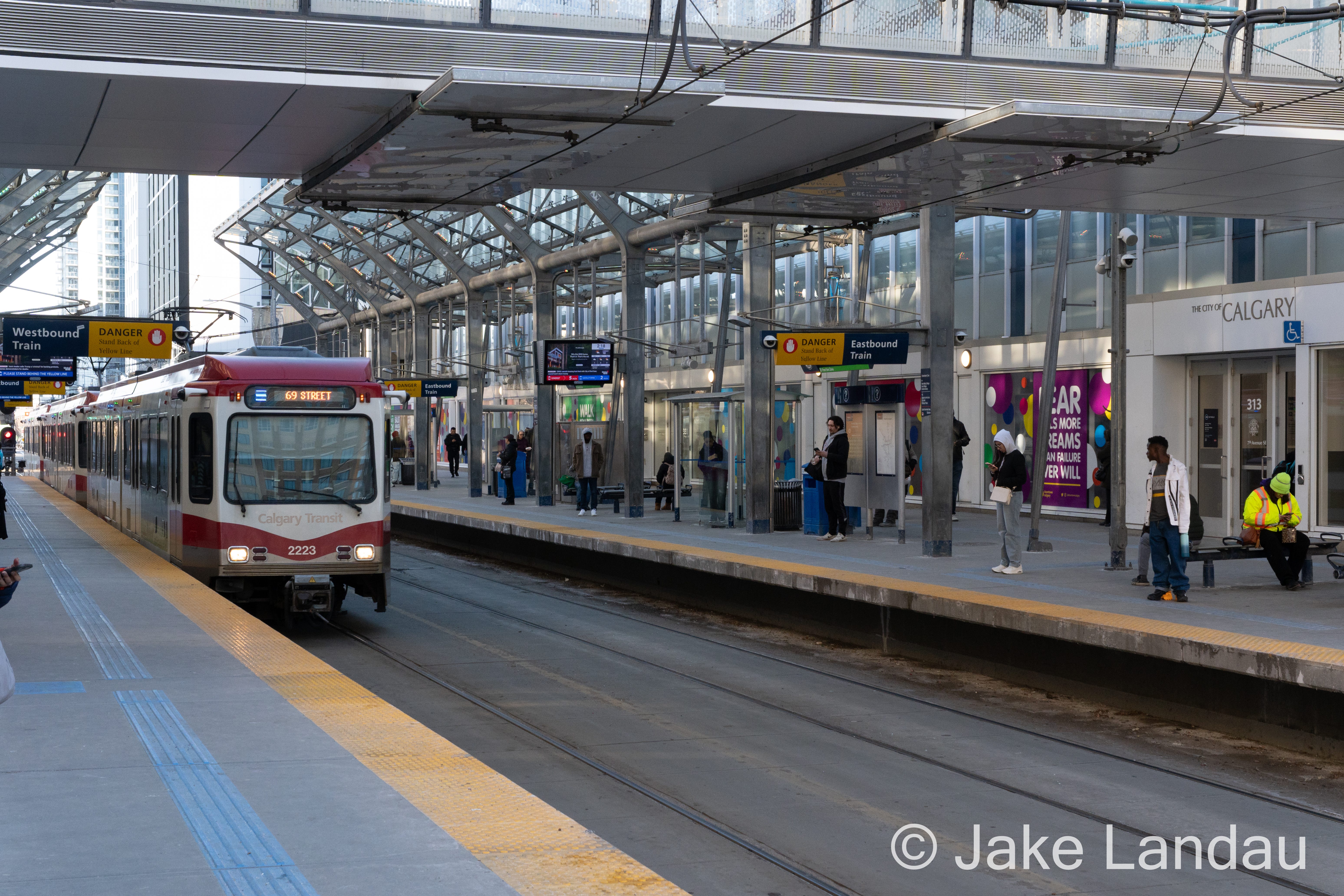
If you are entering or exiting the train anywhere outside that zone, however, you must pay a fare, and Proof-of-Payment officers will conduct random inspections aboard the CTrain. While I do not particularly think that this is the best fare structure for public transit, it does show how free fares can shape urban design; in the Downtown Free Fare Zone, platforms become sidewalks, as pedestrians can freely walk across their length to move around the city, due to the lack of fare controls.
It is also noteworthy that unlike Toronto, Calgary does not run a uniform fleet of trains on the Red or Blue Lines. Currently, you can see three generations of Siemens LRV operating on the CTrain, including the Siemens—Duewag U2 from the 1980s, the Siemens SD-160 from the 2000s, and the modern Siemens S200 from the 2010s.
While the intent is for the newest S200 LRVs to displace the oldest U2 LRVs, this retirement process has not completed, and as a result your ride can occur on a variety of models of rolling stock. Even when this replacement is completed, the SD-160 will still operate side-by-side with the S200.
But to Calgary’s credit, they understand that old does not mean obsolete. Indeed, many of the most popular features of the S200, including air conditioning and the LCD information screens, are being retrofitted into the older SD-160 LRVs, extending their service life and bringing the ridership experience closer to that of the newer trains.
Overall, while I still believe that growing cities will be better-served by elevated and automated metros over street-running and human-operated trams, Calgary does demonstrate that there are better ways to lay out light rail than what Toronto has done, important lessons we should have been willing to learn. But instead?
We’ve now spent CAD$13 billion on a bloated, unreliable mess. Good luck, Toronto!